
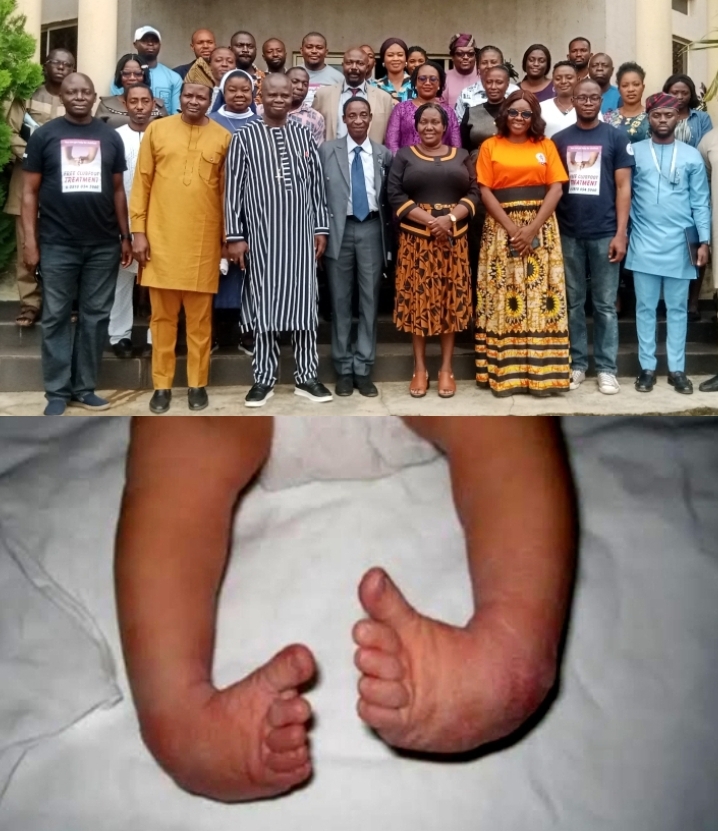
The Ekiti State government has flagged off the Ekiti Clubfoot programme targeting the treatment of children with the condition aged one to five years.
Speaking at the launch in Ado-Ekiti, the Commissioner of Health and Human Services Dr Oyebanji Filani called on parents and guardians whose children fall into this category to make the best use of the initiative
Dr Filani, who was represented at the event by the Permanent Secretary of the Ministry of Health and Human Services, Mrs Olusola Gbenga-Igotun, said that for better treatment, early intervention was crucial to achieve optimal results and prevent long-term complications, adding that with proper treatment, most children with clubfoot can lead active and normal lives.
Dr Filani noted that for a better treatment, early intervention was crucial to achieve optimal results and prevent long-term complications, adding that with proper treatment, most children with clubfoot can lead active and normal lives.
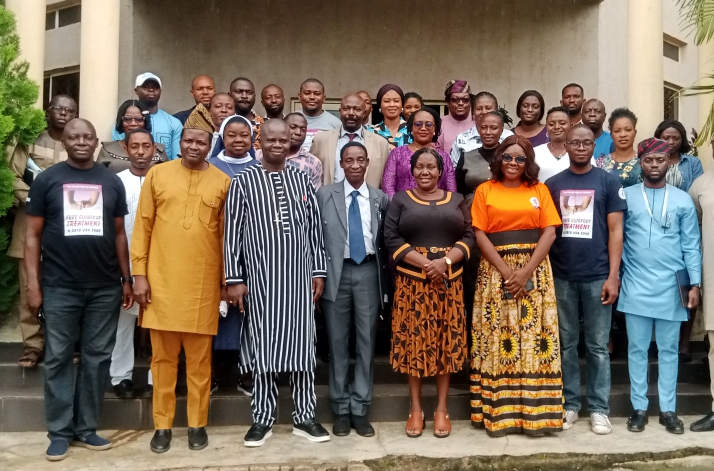
The Commissioner appreciated the Positive Care and Development Foundation for collaborating with the state on the clubfoot treatment initiative.
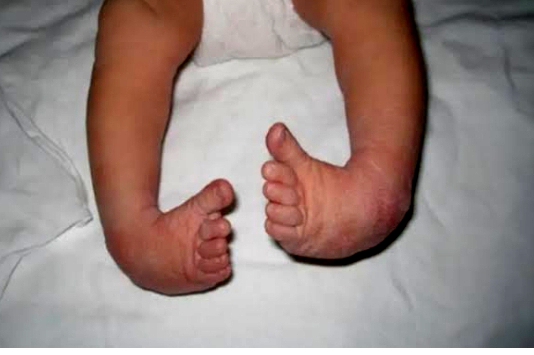
In her address, the Executive Director of the Positive Care and Development Foundation, Dr Esse Nwakanma, explained that clubfoot, also known as talipes equinovarus, is a congenital deformity of the foot that affects infants and young children, characterised by a twisted foot that can’t be manually corrected to a normal position.
Dr Nwakanma said the Positive Care and Development Foundation has been doing free clubfoot surgery in many states of Nigeria, noting that the project is funded by a few families who came together in the United States of America to ensure that no child lives with disability.
“We say zero wheelchairs, we want every Nigerian to be useful, be on their own, be what they want to become unaided.” The Executive Director said.
She disclosed that the foundation was starting the free clubfoot services with Ekiti State University Teaching Hospital and Federal Teaching Hospital, Ido, with the hope of moving to other hospitals across the state in the near future.
In their presentations, technical advisors of the initiative, Dr James Adeniran and Dr Gbadebo Ibraheem, explained that clubfoot is better treated at a very young age, between one and five years, adding that disability treatment becomes very difficult and more expensive in adults.
The medical practitioners noted that clubfoot affects 1.2 babies in every 1000 births and that the condition affects more boys than girls.
They called on the community to create more awareness, identify clubfoot as well as educate parents with children of such conditions to make early presentations of any child with clubfoot to ensure easier and earlier corrections.
